Columbia's Korean Festival
The SC Korean Festival began in 2005 as a modest church event at the Korean Community Presbyterian Church on Richland Street in Columbia. Created to share Korean culture and serve our local neighbors, it has grown over the years beyond anything its organizers could have imagined. Today the festival welcomes visitors from across the entire country.
“Columbia’s
Korean Festival
Saturday
October 31, 2026
10am – 5pm
1412 Richland Street ”
When my family moved to South Carolina in 2016, I joined the church because I wanted my children to stay connected to their Korean heritage. Once I saw the immense positive impact the church and this Korean festival brought to Columbia and the Midlands, I immediately fell in love with the mission and jumped at the opportunity to serve on the Festival Board.
What makes this event so special is its heart. Every church member involved in organizing the festival and preparing food works purely as a volunteer. Every single dollar raised goes right back into the community, with vendors contributing a portion of their profits as well. Last year, organizers were deeply honored to donate $45,000 to local charities and essential services, including SisterCare, Harvest Hope, Oliver Gospel Mission, and local police and fire departments.
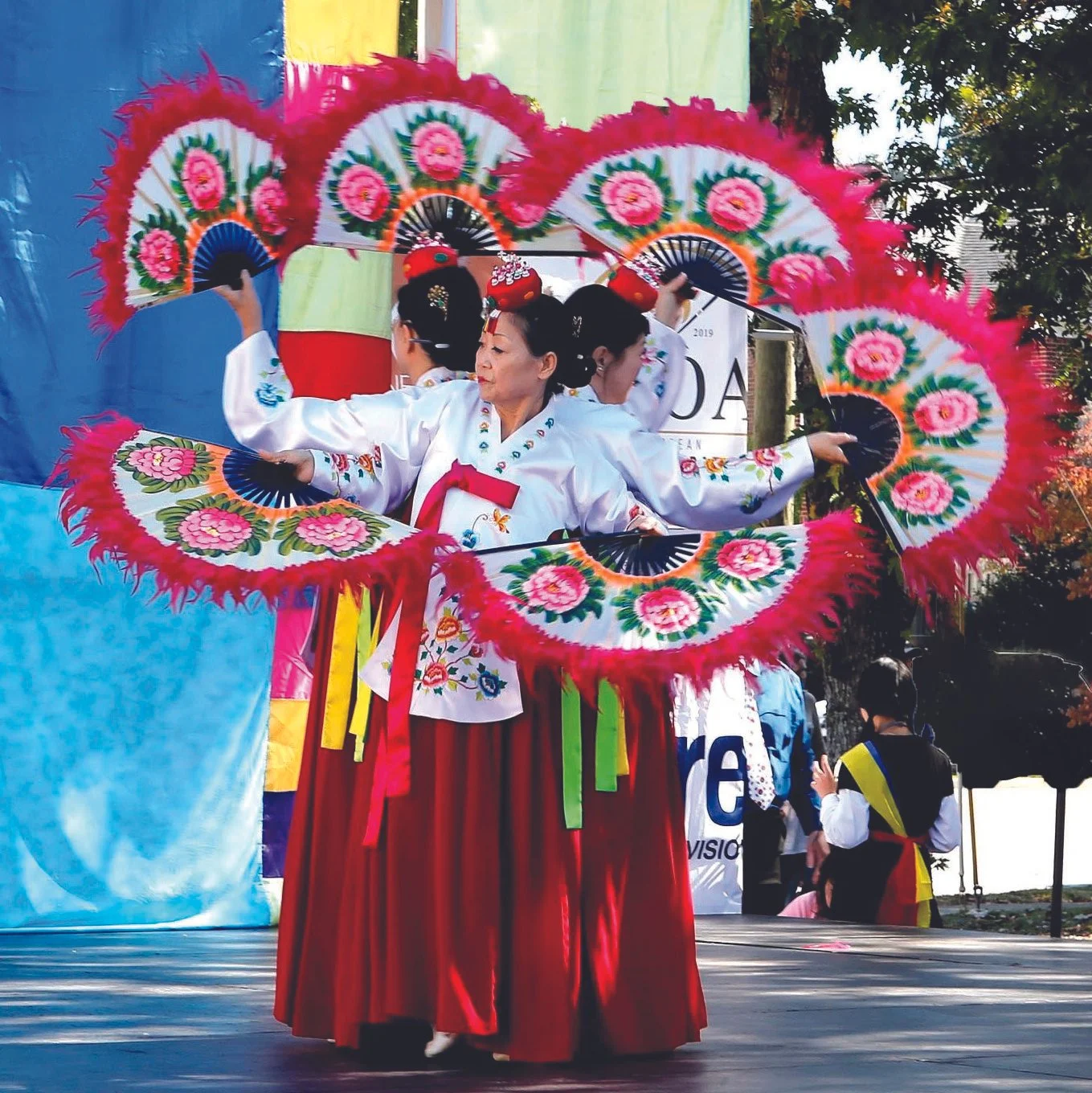
This year, the festival is being held on Halloween, which will make it even more exciting and fun to see the mix of Korean traditional costumes and Halloween costumes in the crowd. There’s a costume contest every year and organizers (myself included) are looking forward to it! Along with traditional Korean costumes, attendees will enjoy a variety of unique Korean experiences.
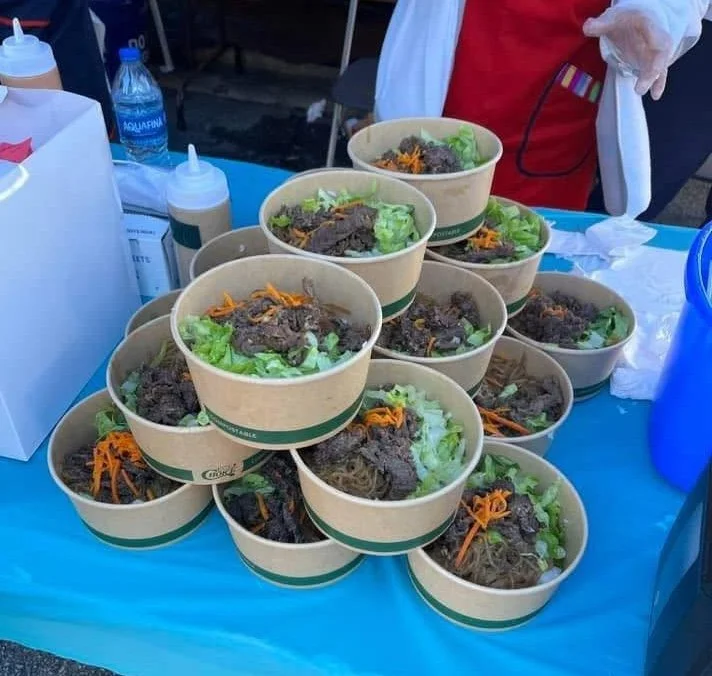
As far as cuisine goes, visitors can expect a mix of Korean comfort food classics with savory and sweet street bites. Korean food is not always spicy. While dishes featuring Gochujang (fermented chili paste) are famous –there was even a viral trend of eating extremely spicy food like “Buldak ramyeon”– a huge portion of Korean cuisine is very sophisticated in preserving the natural flavors of each ingredient. Main dishes --like Bulgogi, Japchae, Bibimbap, Gimbap-- have mild and rich flavors. Korean food is deeply tied to nature and seasonal eating and uses fermentation as its absolute foundation. Like cheese and wine, it’s all about timing and the preservation of natural ingredients ultimately converting into gut-healthy foods.
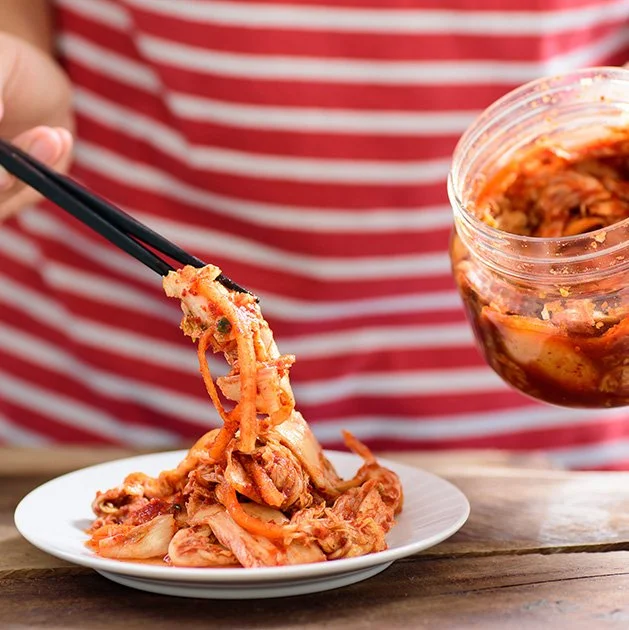
The biggest difference in Korean meals (compared to American), I would say, is the living and dynamic experience you get with dishes. A dish is never served as a single plated entree but the table is always fully set with assorted Banchan (small side dishes), hot or cold, raw or cooked, spicy or mild, fermented, pickled, savory, steamed, fried and even sweet dishes– all create interesting flavor combinations.
Along with traditional food, traditional Korean percussion music will also be featured at the festival. Samulnori, which translates literally to “the playing of four elements”, is a high-energy, deeply rhythmic genre of percussion music. It is performed using four distinct traditional instruments, each representing a force of nature:
Kkwaenggwari (Small brass gong): The sharp, commanding voice of Thunder.
Jing (Large brass gong): The deep, reverberating tone of the Wind.
Janggu (Hourglass-shaped drum): The rolling, dynamic sound of Rain.
Buk (Barrel drum): The steady, grounding beat of the Clouds.
While its roots stretch back centuries to the ancient rural folk music played by farmers to celebrate harvests, bless villages, and build community, Samulnori as we know it today was modernized in 1978 to be adapted for the stage. They condensed traditional village rituals into structured concert arrangements.
Samulnori is important because it’s considered much more than just music, it is the beating heart of Korean cultural identity and communal spirit. It bridged the gap between ancient agrarian traditions and modern global performance art, saving centuries-old rhythms from fading into history. And just like Korean cuisine or cinema, Samulnori has become an ambassador of Korean cultural heritage worldwide.
While traditional percussion is important in the culture, the festival will also feature traditional music, dances, and weddings. The traditional Korean wedding is a little different from an American one. While both traditions are built on celebrating love and commitment, a traditional Korean wedding centers around the union of two families rather than just two individuals. The bride and the groom wear the traditional Hanbok. There’s a large table set with key ritual items such as: wild geese (carved wooden geese nowadays) which symbolize the promise of devotion and protection; bamboo and pine branches symbolizing fidelity; red and blue candles symbolizing the Yin/Yang; dates and chestnuts symbolizing sons and daughters for fertility and long wheat noodle or yarn symbolizing a long, happy, and prosperous life together.
Traditionally, a Korean wedding was a multi-day journey across two homes. The wedding began at the bride’s family home, where the couple was officially married. After several days of celebration, the groom would lead a grand procession to carry his bride to his family’s home, where she was officially introduced to his lineage. Today, the event is seamlessly compressed into a single, highly-orchestrated day. Couples perform the core rituals, the public ceremonial wedding followed by the private family blessing and then a festive banquet in the evening.
Another Korean Tradition – Taekwondo – will be showcased at the festival. Taekwondo is Korea’s official national martial art, though its full history is a blending of ancient roots and mid-20th-century modernization. Its ancestral roots trace back over 2,000 years to ancient Korean kingdoms, where combat systems were practiced by warriors. With time, Korean martial arts masters unified various training halls to create a single, standardized modern discipline. In 1955, the name Taekwondo was officially adopted.
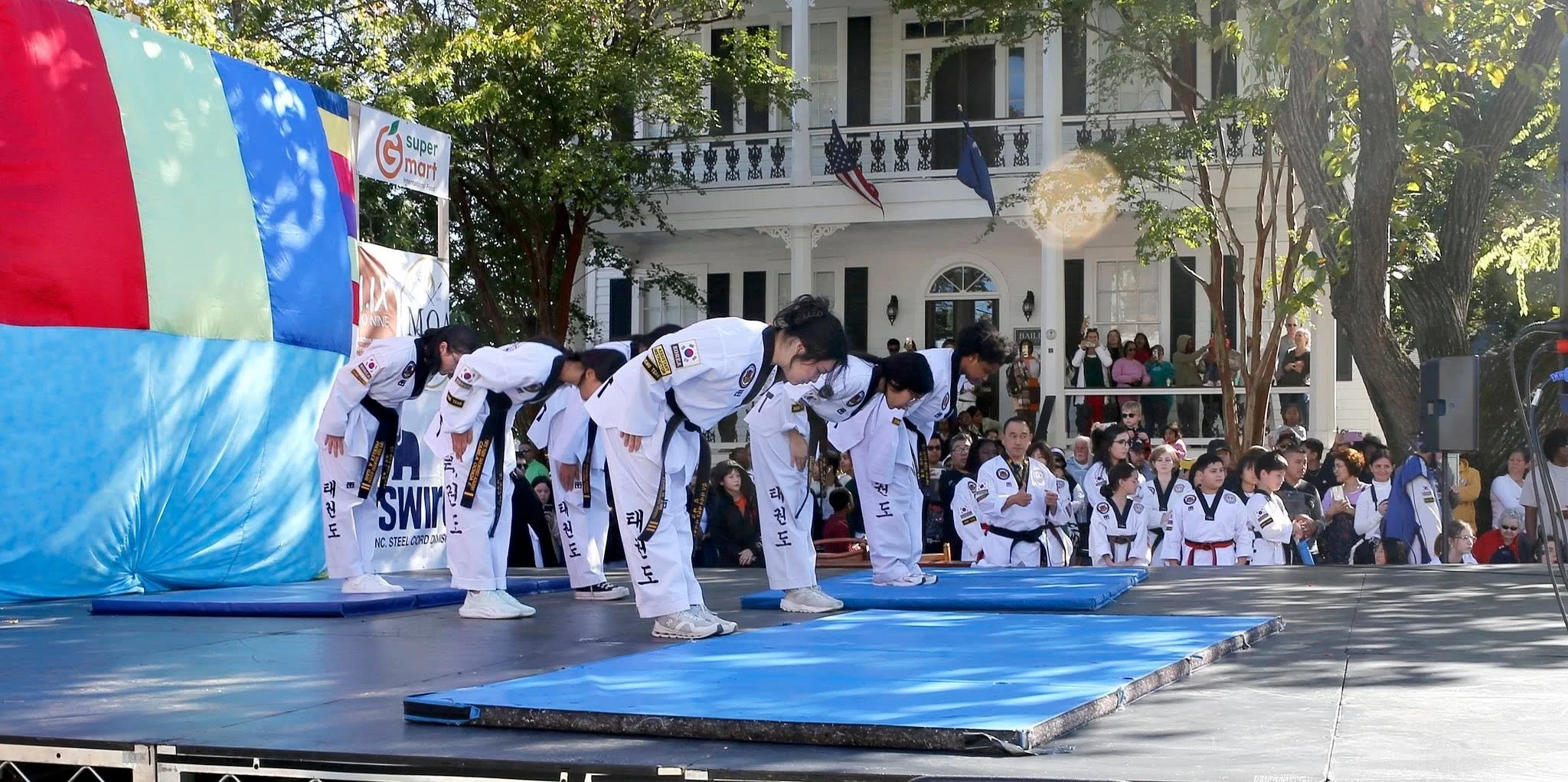
The word Taekwondo (태 권 도) is composed of three Korean characters, each representing a core element of the discipline:
Tae (태 ): “To trample” or “to strike with the foot”—representing the dynamic kicks, jumps, and footwork that define the art.
Kwon (권 ): “Fist” or “to strike with the hand”—representing punches, open-hand strikes, and defensive blocks.
●Do (도 ): “The way,” “path,” or “discipline”—representing the mental, moral, and philosophical journey of self-improvement, respect, and self-control.
Together, the name reflects both the physical techniques (striking with feet and hands) and the mental philosophy (the lifelong path of personal growth and character building).
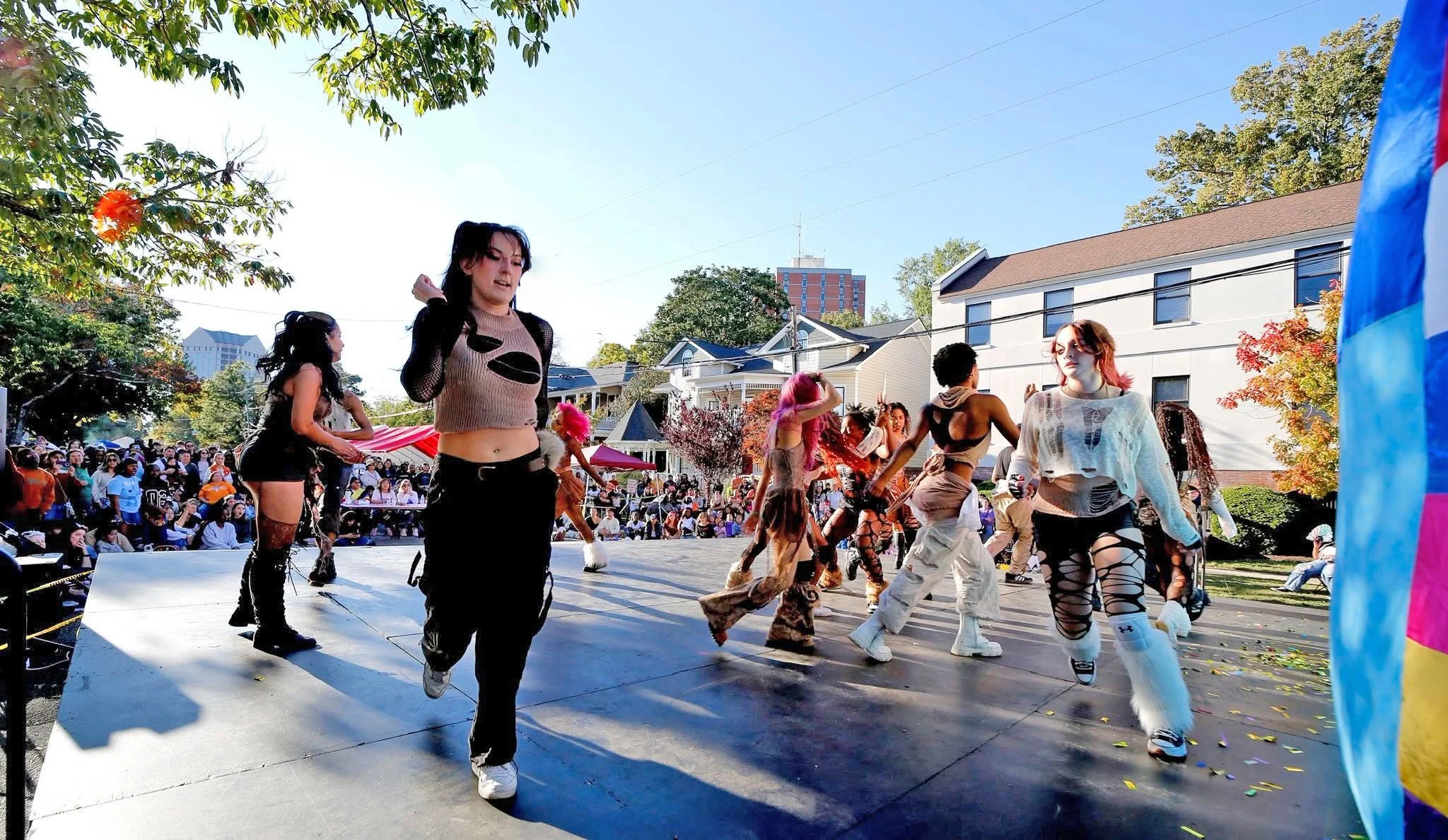
While many of the Korean events at the festival are traditional, not all are. A K-Pop modern dance contest promises something for everyone. With two separate dance contests, one for solo participants, and one for teams; the K-Pop genre -both dancing and singing- has taken performance art to an entirely new level of technical precision, complexity, and visual story telling. The contests are open to all ages and all styles of dance. Contestants are encouraged to wear any clothing that shows and expresses their style. Now what exactly does that look like? We shall see…
There is something for everyone at Columbia’s Korean Festival. The heart of it is deeply tied to Korean Community Presbyterian Church Christian mission: to love, serve, and give back. While all of the organizers love to highlight the incredible performances, food and the Korean Culture as a whole, the heart of the Festival comes down to serving the community and charity. It’s a completely family-friendly event where anyone can step in, be immersed in Korean Culture, taste authentic dishes, enjoy live Taekwondo demos and K-Pop. With free Admission and 100% of the proceeds raised by church volunteers going directly back into supporting Columbia-area charities, there are countless reasons to attend. Immerse yourself in Korean culture; join us at the Festival!
Columbia’s Korean Festival
Saturday, October 31, 2026
10am-5pm
1412 Richland Street, Columbia SC
FREE ADMISSION!