Dr. Luke Bonnett discusses Children's Health and Vaccines
Summer is in full swing, and we are all enjoying the lake, the beach, our hammocks, and the dog days in general; but September is just around the corner, and the back-to-school season is upon us. That means kids are finishing up summer reading, shopping for school supplies; and parents might be scheduling children’s well-visits to get SC-specific school immunization requirements.
Vaccines are a tricky subject; one that inadvertently begets questions about their necessity, personal freedom, and a lot of contradictory information. To better understand vaccines in children, dispel some fallacies and keep parents properly informed, we sat down with Dr. Luke Bonnett of Chapin Pediatrics to discuss the pros and cons of vaccines and the ideal back-to-school protocol to ensure the health and happiness of Chapin’s children.

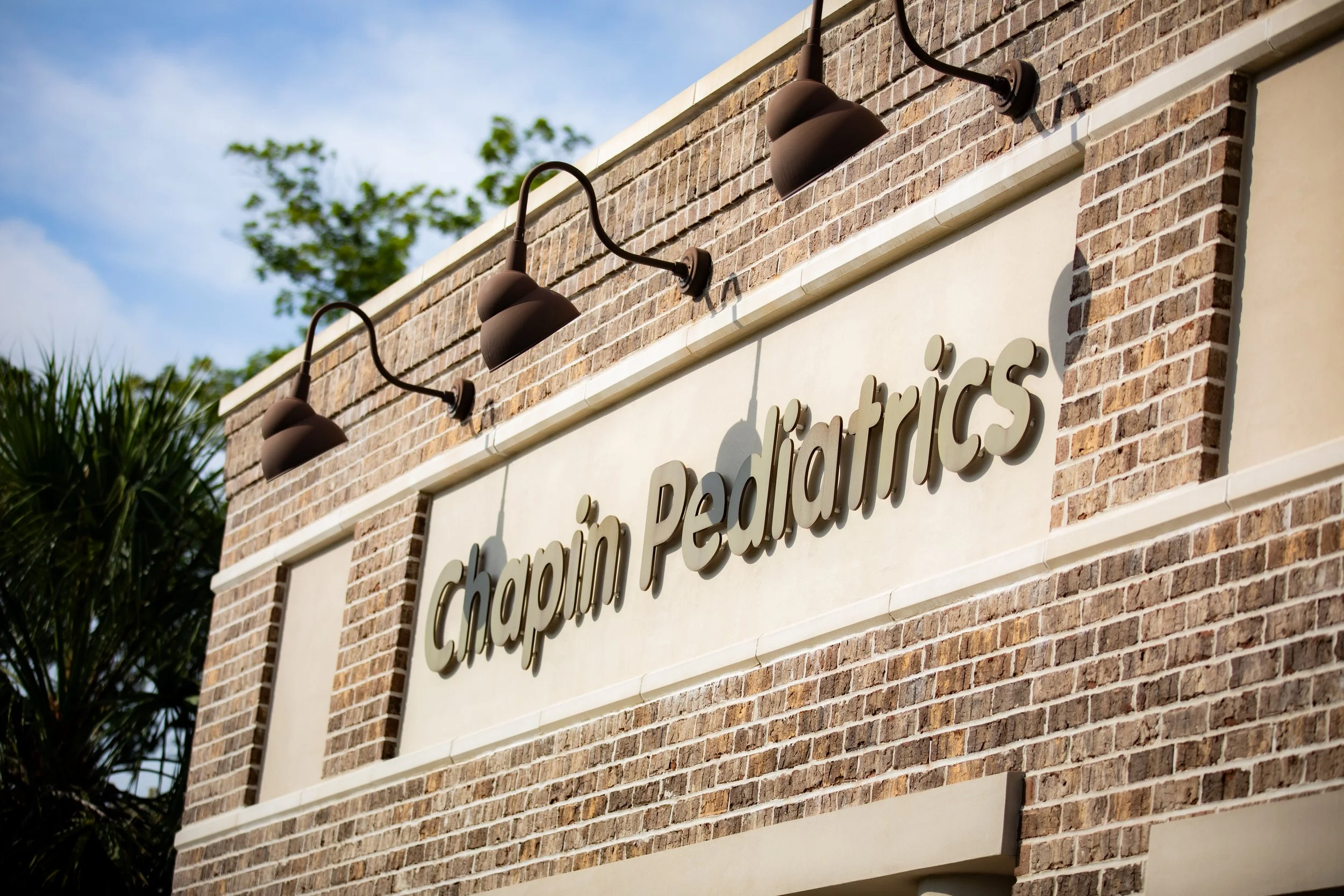
Dr. Luke Bonnett of Chapin Pediatrics
It’s my (weak) understanding that vaccines are basically weak strains of whatever disease they protect against. Is that correct? Will you briefly explain what vaccines are and how they work?
You are partially right. Historically, many vaccines were just weakened or killed versions of a virus or bacteria. Today, our technology is much more precise. While we still use some weakened or killed viruses, many modern vaccines use only a fragment of the germ, like a single protein, or mRNA instructions that teach the body to make that single protein.
Think of a vaccine as a “WANTED” poster for a child’s immune system. It shows the body’s defenses exactly what the “bad guy” looks like without introducing the actual danger. Your child’s immune system studies the bad guy, builds specialized defenses (antibodies), and files that knowledge away. If the real disease ever tries to attack, the body recognizes it instantly and destroys it before it can cause harm.
What vaccines are required for South Carolina children to attend public school?
For the 2026–2027 school year, South Carolina requires students entering grades 5K through 12th to be up-to-date on specific immunizations to attend public, private, or parochial schools.
The core required list includes:
DTaP / Tdap: Diphtheria, Tetanus, and
Pertussis (whooping cough)
Polio
MMR: Measles, Mumps, and Rubella.
Hepatitis A
Hepatitis B
Varicella: Chickenpox vaccine
For younger kids entering childcare or 4K, there are additional requirements.
How effective are vaccines? Do they always work?
Not much in medicine is 100% effective, but vaccines get remarkably close. Vaccines dramatically reduce risk and severity of illness. Most routine childhood vaccines provide 85% to 99% lower risk of getting the disease compared to people who do not get the vaccine. Even in the rare cases where a vaccinated child does catch the illness, the vaccine drastically reduces the severity of the disease.
Why would we need to vaccinate against diseases that don’t exist anymore? If no one has polio, for example, why do we need to vaccinate for it?
This is one of the most common paradoxes in pediatric medicine. Vaccines are victims of their own success. We don’t see polio in Chapin because the vaccine works so well, but the virus itself hasn’t been completely wiped off the face of the earth. We live in a global society. A disease that is just a plane ride away can easily re-enter an unvaccinated community. If we lower our shield and stop vaccinating, it takes only one imported case to spark an immediate outbreak. We keep vaccinating to keep the disease at zero.
Can we talk about measles? I keep hearing about how measles has made a comeback. Do I need to worry about that?
No need to panic, but it is something pediatricians, especially in South Carolina, are watching closely. South Carolina had the largest measles outbreak in the United States since the disease was declared eliminated. The state reported nearly 1,000 confirmed cases during a massive outbreak that began in late 2025 and continued into early 2026 before being officially declared over…for now.
Measles is one of the most contagious infectious diseases on earth. If an unvaccinated person enters a room where someone with measles coughed even two hours ago, they have a 90% chance of catching it.
Because immunization rates have dipped in various pockets across the country, we are seeing localized flare-ups. If your child is fully vaccinated with their two doses of MMR, you don’t need to worry since they are highly protected. But for infants too young to get the shot or children who are immunocompromised, a local outbreak is a very real threat.
So how many vaccines are typically given to a child at one time?
It depends heavily on the visit. At certain checkups like the 2-month, 4-month, or 6-month well visits a child could receive four or five injections, and an oral vaccine. However, thanks to modern science, we use combination vaccines whenever possible. For example, the Pediarix shot combines DTaP, Hepatitis B, and Polio into a single injection. This allows us to protect against five or six different diseases using only two or three physical injections, saving the child unnecessary discomfort.
Can giving too many vaccines at a time overwhelm a child’s immune system?
It is completely natural to look at a tiny baby and worry about this, but clinically, the answer is a definitive no. A baby’s immune system is incredibly robust. From the moment they are born they are bombarded by bacteria and viruses on everything that touches them, they touch, breathe, and put in their mouths.
In comparison, the total number of active ingredients across all modern childhood vaccines combined is a drop in the ocean, just a tiny fraction of what a child’s immune system handles effortlessly on any given day.
Do I have to get my child vaccinated? What are the consequences of not getting a vaccine for say, a very rare disease?
Legally, South Carolina does allow for medical and religious exemptions for school attendance. However, choosing not to vaccinate carries significant real-world consequences.
First, if there is an outbreak of a vaccine-preventable disease at your child’s school, unvaccinated children will be legally barred from attending school for weeks for their own safety, which can severely disrupt their education and a parent’s work schedule. Second, ‘rare’ diseases stay rare only because of high vaccination rates. If your child is unprotected and contracts a rare disease like tetanus, which lives in the soil, the medical consequences can be devastating, resulting in hospitalization or possibly death.
I worry that the prevention is worse for a child than the actual disease. What about autism? I have heard so many things linking vaccines to autism.
I hear this concern from parents daily and I welcome the conversation because we can put it to bed with absolute certainty. Vaccines do not cause autism.
The original fear came from a 12-patient ‘study’ published in 1998 by a British doctor named Andrew Wakefield. It was later discovered that he entirely falsified his data for financial gain. The study was retracted, and his medical license was permanently revoked. Since then, massive global studies involving millions of children have looked at this extensively and found zero link. The reason autism signs often appear around the same time kids get their toddler vaccines is simply a developmental coincidence, not cause-and-effect.
When I give blood, I am told I may feel a little tired, and I should take it easy for the rest of the day. What are the aftereffects of vaccines for children? Are there side effects of certain vaccines?
Just like adults, children can absolutely experience mild, temporary side effects. The most common ones are a low-grade fever, irritability, and soreness or redness at the injection site.
These aren’t actually signs that the child is “sick” they are signs that the vaccine is doing its job. That mild fever means the immune system is actively building its defense army. These side effects typically clear up on their own within 24 to 48 hours, and a little extra cuddle time or some Tylenol, if approved by your pediatrician, handles it well.
Vaccines are prescribed to babies and young children. Why are they given so early?
We vaccinate early because that is when children are at the absolute highest risk of dying from these diseases. A newborn’s immune system doesn’t have the mature defenses to fight off an aggressive infection like pertussis (whooping cough) or haemophilus influenzae (Hib).
We want to build that protective wall of immunity before they are exposed to the world, daycare, or older siblings bringing germs home from school. Delaying the schedule simply leaves a child unprotected during the most vulnerable window of their life.
It is important to note that babies who are breast fed receive some temporary protection that can reduce the risk of ear infections, diarrhea, and respiratory issues, but breast milk does not contain the necessary antibodies to protect against severe, life-threatening diseases that vaccines help prevent.
What about the COVID-19 vaccines? Are those still around? Are they required?
Yes, they are still around, but they are not required for school attendance in South Carolina.
Federally, the childhood vaccine architecture shifted recently. The CDC categorizes COVID-19 and annual flu shots under “shared clinical decision-making”. This means that instead of a universal blanket mandate, it is a personalized conversation between the medical provider and the parents. We look at your child’s health profile, their risk factors, and your family’s dynamic to decide if an annual COVID-19 dose makes sense for them.
If enough people get vaccinated, is that the same thing as herd immunity?
Precisely. Herd immunity, or community immunity, happens when a high percentage of a population is immune to a disease, making it incredibly difficult for an infectious germ to spread from person to person. This creates a protective biological shield. Herd immunity is crucial because it protects the most vulnerable “members of our herd’” who cannot get vaccinated such as newborns, children undergoing chemotherapy, immunocompromised individuals, or children with severe allergies.
What do you typically recommend to your patients’ parents regarding vaccines? What if they refuse?
I strongly recommend following the standard immunization schedule outlined by the South Carolina Department of Public Health and the American Academy of Pediatrics. It is the single safest, most thoroughly researched way to protect your child.
If a parent is hesitant or declines vaccines, my door doesn’t slam shut. There was a time when I adhered to a strict policy that if a family chose not to vaccinate their child, Chapin Pediatrics was not the practice for them. There were many reasons for that policy, and at the time, many pediatric practices took a similar approach.
Over the years, however, increasing misinformation and confusion surrounding vaccines have led us to adopt a different approach. I remain convinced that vaccinations are one of the safest and most effective ways to protect children from serious disease. My role is to listen with empathy, understand a family’s specific concerns, and provide clear, scientifically-grounded information so parents can make informed decisions.
I try to work with families because meaningful conversations rarely happen when relationships are severed. By maintaining trust and preserving an ongoing partnership, we have the opportunity to continue caring for children and to revisit these discussions over time as questions arise and concerns evolve.

Is there anything you’d like to add?
From a workflow standpoint I just want to remind parents not to wait until the final week of August to schedule preventative care appointments. The back-to-school rush turns pediatrics clinics into absolute beehives. It is best to book appointments early in the summer. It gives us time to comfortably review their immunization certificates, fill out all the necessary school sports or daycare forms, and ensure that children can start their school year healthy, happy, and right on time.
From a personal standpoint I want families to know we have their child’s health and best interest in mind. At Chapin Pediatrics we do the same for our own children that we recommend for theirs. We take care of their children the same way we would want ours taken care of. We do not take any medical decision lightly, especially the decision to vaccinate which is now riddled with controversy. Families need to find a pediatric practice, a medical home, that they trust with their child’s care and guidance in decision making. A medical home is more than a place to be seen when your child is sick. It is a relationship built over years. It is a team that knows your family, knows your child’s history, understands their personality, remembers their struggles, celebrates their milestones, and sees the bigger picture of their health. When your child is cared for by a team that knows them, decisions are better. Advice is more personal. Treatment is safer. Trust is stronger.